Author Archives: Raeli Hydro

Author: Raeli Hydro

Get to know more about how to borehole drilling services in your Area in Kenya, By getting in touch with us for inquiries and more information. Furnish us with your borehole drilling services requirements, location of drilling and urgency, and we will revert with very useful information about the process. We have invested heavily in Borehole drilling equipment, state ofthe art technology, skillset and experience, to deliver the best services to our clients. We drill for homes, schools, churches, communities, non-profit organizations, hotels, lodges and more. https://raelihydro.com/

How Many Boreholes on Average Get Drilled Every Year in Kenya?

Kenya’s reliance on groundwater has surged in recent years, driven by recurring droughts, population growth, and the need for reliable water sources in arid and semi-arid regions. Boreholes have become a critical lifeline for households, farms, and industries, particularly in areas where surface water is scarce or unreliable. But just how many boreholes are drilled annually in Kenya? The answer, based on the latest official data from the Kenya National Bureau of Statistics (KNBS), reveals a dramatic upward trend—with the country now averaging over 35,000 new boreholes per year.

This article examines the most recent statistics, regional disparities, the role of private versus public investment, and the broader implications of Kenya’s borehole drilling boom.


Official Statistics: A Rapidly Growing Trend

The most authoritative source for borehole drilling data in Kenya is the Economic Survey published annually by KNBS. The latest reports show a sharp increase in the number of boreholes drilled each year:

  • 2018/19: 15,418 boreholes
  • 2020/21: 20,409 boreholes
  • 2021/22: 39,163 boreholes
  • 2022/23: 45,086 boreholes
  • 2023/24: 45,856 boreholes
  • 2024/25: 47,199 boreholes

Calculating the six-year average (2018/19–2024/25) gives:
(15,418 + 20,409 + 39,163 + 45,086 + 45,856 + 47,199) ÷ 6 = 35,522 boreholes per year

However, this average masks a significant acceleration in drilling activity. While the annual figure was below 20,000 just five years ago, it has since more than doubled, stabilizing at around 45,000–47,000 boreholes per year in the most recent periods. If we consider only the last three years (2022/23–2024/25), the average rises to 46,047 boreholes annually—highlighting the scale of recent growth.


Private Sector Dominance in Borehole Drilling

A striking feature of Kenya’s borehole expansion is the dominance of the private sector. According to KNBS data:

  • 2022/23: Private sector drilled 40,763 boreholes
  • 2023/24: Private sector drilled 41,508 boreholes
  • 2024/25: Private sector drilled 42,791 boreholes, while the public sector drilled just 4,408

This means over 90% of all new boreholes are now funded and drilled by private companies, households, and commercial entities. The shift reflects both declining government investment in rural water infrastructure and growing demand from individuals and businesses seeking water security.

The private sector’s role has been particularly pronounced in arid and semi-arid lands (ASALs), where communities can no longer rely on seasonal rainfall. As one pastoralist in northern Kenya told the International Organization for Migration (IOM), “We cannot only rely on rainfall because it is not enough. The amount of rainfall we are receiving has been declining over the years. We want boreholes so we can have a constant supply of water.”


Regional Distribution: Where Are Boreholes Being Drilled?

Borehole drilling is not evenly distributed across Kenya. The highest concentrations are found in:

  1. Arid and Semi-Arid Lands (ASALs) – Counties like Turkana, Marsabit, Garissa, Wajir, and Mandera, where surface water is scarce, have seen the most aggressive drilling. For example, Turkana County’s 1.2 million residents rely on just 487 functional boreholes, indicating both high demand and the critical need for more infrastructure.
  2. Fast-Growing Urban Centres – Nairobi, Nakuru, Kisumu, and Machakos have experienced a surge in borehole drilling to support residential, commercial, and industrial water needs. The average depth of boreholes in these areas ranges from 100 to 300 meters, depending on geology.
  3. Agricultural Hubs – Counties like Laikipia, Kajiado, and Baringo, where irrigation is essential for farming, have also seen significant drilling activity.

Despite this growth, infrastructure has not kept pace with demand. In arid counties, only 22% of households have access to improved water sources within one kilometer, compared to 59% nationally.


The Cost of Drilling a Borehole in Kenya

The cost of drilling varies significantly based on depth, geology, and location. Current market rates (2026) indicate:

  • Air drilling: KES 6,500–7,200 per meter
  • Mud drilling (for harder rock): KES 6,500–9,500 per meter
  • Average total cost (for a 100–150m borehole): KES 650,000–1,500,000 (approximately $5,000–$12,000)

Additional costs include:

  • Hydrogeological survey: KES 50,000–65,000
  • Casing, graveling, and test pumping
  • Pump installation (electric or solar-powered)

The high upfront cost explains why private sector drilling is concentrated among wealthier households, commercial farms, and institutions—while lower-income communities often rely on shared or communal boreholes.


Challenges and Concerns

While the boom in borehole drilling has improved water access, it has also raised serious sustainability concerns:

1. Groundwater Depletion

With thousands of new boreholes added annually, there is a growing risk of over-extraction, particularly in aquifers that are not being recharged at a sufficient rate. A 2020 study published in Hydrogeology Journal warned that groundwater abstraction in the Nairobi Aquifer System is increasing rapidly, with five new borehole permit applications being submitted daily in some regions.

2. Water Quality Issues

In some ASAL regions, high salinity levels in borehole water have been reported. A study in Kitui County found that many boreholes exceeded WHO salinity thresholds, making the water unsuitable for drinking or even livestock use. This underscores the need for better hydrogeological surveys before drilling.

3. Lack of Regulation and Oversight

While the Water Resources Authority (WRA) is mandated to regulate borehole drilling under the Water Act 2016, enforcement remains weak. Many boreholes are drilled without proper permits, leading to:

  • Unsustainable extraction rates
  • Poorly constructed boreholes that collapse or contaminate aquifers
  • Conflicts over water rights in communal areas

4. Infrastructure Maintenance

A PLOS Water study found that two-thirds of rural water systems in Kenya’s ASALs become dysfunctional within 3–5 years. Poor maintenance, lack of spare parts, and inadequate community management contribute to this high failure rate.


Future Outlook: What’s Next for Kenya’s Borehole Industry?

Several factors will shape the future of borehole drilling in Kenya:

1. Climate Change and Increasing Droughts

With Kenya’s renewable freshwater per capita dropping from 647 m³ in 2020 to 586 m³ in 2026 (well below the 1,000 m³ threshold for water scarcity), demand for groundwater will continue to rise. The African Development Bank has committed $85 million to rehabilitate 200 boreholes and construct 50 water pans in Garissa, Wajir, and Mandera—signaling continued investment in groundwater solutions.

2. Technological Advancements

  • Solar-powered pumps are becoming more affordable, reducing reliance on grid electricity.
  • Improved hydrogeological mapping using remote sensing and GIS is helping identify the best drilling sites.
  • Community-managed boreholes with trained water committees (as seen in Laikipia and other ASAL regions) are improving sustainability.

3. Policy and Regulatory Reforms

The government is under pressure to:

  • Strengthen WRA’s enforcement of drilling permits
  • Promote rainwater harvesting to reduce groundwater dependence
  • Invest in aquifer recharge programs to prevent depletion

4. Private Sector Expansion

With over 90% of new boreholes now privately funded, companies like Raeli Hydro, Grekkon Limited, and Waterlift Solar are expanding their operations. The borehole drilling industry is now a multi-billion-shilling sector, employing thousands and supporting water access for millions.


Conclusion: Kenya’s Borehole Boom in Numbers

Based on the latest KNBS data, Kenya drills an average of 35,500–47,000 boreholes per year, with the number rising sharply in recent years. The private sector accounts for over 90% of this growth, driven by water scarcity in ASAL regions, urban expansion, and agricultural demand.

While boreholes have transformed water access for many Kenyans, sustainability remains a major concern. Without better regulation, aquifer management, and community involvement, the current drilling boom could lead to groundwater depletion, water conflicts, and failed infrastructure in the long run.

For now, the numbers tell a clear story: Kenya is drilling boreholes at an unprecedented rate—and the trend shows no signs of slowing down.


Key Takeaways

✅ Average annual boreholes (2018–2025): ~35,500
✅ Recent annual average (2022–2025): ~46,000
✅ Private sector share: >90%
✅ Average drilling cost: KES 650,000–1.5M (100–150m depth)
✅ Biggest demand drivers: ASAL water scarcity, urban growth, agriculture
Borehole Drilling Service in Kasighau – Reliable Water Solutions by RaeliHydro!

Are you tired of unreliable water sources in Kasighau? Do you want a permanent, clean, and sustainable water solution for your home, farm, or business? Look no further! RaeliHydro is your trusted partner for professional borehole drilling services in Kasighau and the surrounding areas. With years of experience, state-of-the-art equipment, and a commitment to excellence, we deliver high-quality boreholes that provide long-lasting access to fresh, clean water.


🔍 Why Choose RaeliHydro for Your Borehole Drilling Needs?

At RaeliHydro, we understand that water is life. That’s why we go above and beyond to ensure that every borehole we drill meets the highest standards of quality, efficiency, and durability. Here’s why we stand out:

✅ Expertise & Experience – Our team consists of highly skilled geologists, hydrologists, and drilling engineers with extensive experience in borehole drilling. We use scientific methods to locate the best drilling sites, ensuring maximum water yield and minimal risk of dry or low-yield boreholes.

✅ Advanced Drilling Technology – We use modern, high-performance drilling rigs that can handle all types of terrain, from rocky landscapes to sandy soils. Our equipment is regularly maintained and updated to ensure efficiency, safety, and precision in every project.

✅ Customized Solutions – Every property is unique, and so are its water needs. Whether you need a domestic borehole, agricultural borehole, or commercial water supply, we tailor our services to match your specific requirements. We also offer borehole testing, pump installation, and maintenance services to keep your water flowing smoothly.

✅ Affordable & Transparent Pricing – We believe that clean water should be accessible to everyone. That’s why we offer competitive pricing with no hidden costs. Our quotes are detailed and upfront, so you know exactly what you’re paying for.

✅ Fast & Reliable Service – We value your time. Our team works efficiently and professionally to complete your borehole drilling project on schedule, with minimal disruption to your property.

✅ After-Sales Support – Our relationship with you doesn’t end after drilling. We provide ongoing support, maintenance, and repair services to ensure your borehole remains functional and productive for years to come.


💧 Our Borehole Drilling Process – What to Expect

At RaeliHydro, we follow a structured, step-by-step process to guarantee the best results for your borehole project:

1️⃣ Site Assessment & Hydrogeological Survey
Before drilling begins, our experts conduct a thorough site assessment to determine the best location, depth, and drilling method for your borehole. We analyze soil composition, water table levels, and geological formations to ensure optimal water yield.

2️⃣ Drilling & Casing Installation
Using our high-tech drilling rigs, we bore deep into the earth to reach reliable aquifers. Once the desired depth is achieved, we install durable PVC or steel casings to prevent collapse and protect the borehole from contamination.

3️⃣ Aquifer Testing & Water Quality Analysis
After drilling, we perform pumping tests to assess the flow rate and sustainability of the water source. We also conduct water quality tests to ensure the water is safe for drinking, farming, or industrial use.

4️⃣ Pump Installation & System Setup
We help you choose the right pump (submersible, solar, or electric) based on your water needs and energy availability. Our team ensures proper installation for maximum efficiency and longevity.

5️⃣ Final Inspection & Handover
Before handing over the project, we carry out a final inspection to confirm that everything is in perfect working condition. We also provide you with maintenance tips and contact details for support.


🌍 Why Borehole Drilling is the Best Water Solution in Kasighau

Kasighau, like many regions in Kenya, faces water scarcity challenges, especially during dry seasons. Relying on rainwater, rivers, or municipal supply can be unreliable and expensive. A privately owned borehole offers numerous benefits:

🌧️ Drought-Proof Water Supply – Unlike surface water, groundwater is less affected by droughts, providing a consistent water source all year round.

💰 Cost-Effective in the Long Run – While the initial investment may seem high, a borehole saves you money in the long term by eliminating water bills and reducing dependency on water vendors.

🌱 Perfect for Farming & Livestock – Farmers in Kasighau can boost agricultural productivity with a reliable irrigation system powered by borehole water. No more crop failures due to water shortages!

🏡 Increases Property Value – A functional borehole adds significant value to your land or home, making it a smart investment for the future.

🌿 Eco-Friendly & Sustainable – Boreholes reduce pressure on natural water sources like rivers and lakes, promoting environmental conservation.


📞 Contact RaeliHydro Today for a Free Consultation!

Don’t let water shortages hold you back! Whether you’re a homeowner, farmer, school, hospital, or business owner in Kasighau, **RaeliHydro is here to provide you with a dependable, high-yield borehole that meets your needs.

📍 Service Areas: Kasighau, Voi, Mombasa, Kilifi, Taita Taveta, and surrounding regions.

📞 Call/WhatsApp: [Insert Contact Number]
📧 Email: [Insert Email Address]
🌐 Website: [Insert Website, if available]
📍 Office Location: [Insert Physical Address]


💬 What Our Clients Say About Us

“RaeliHydro drilled a borehole for my farm in Kasighau, and I couldn’t be happier! The water flow is excellent, and my crops have never been better. Their team was professional, punctual, and very knowledgeable. Highly recommended!” – James M., Farmer, Kasighau

“We had tried other drilling companies before, but RaeliHydro was the only one that delivered a high-yield borehole on the first attempt. Their after-sales service is also top-notch.” – Mary K., Homeowner, Voi

“As a school, we needed a reliable water source for our students. RaeliHydro not only drilled a great borehole but also installed a solar-powered pump, saving us on electricity costs. Thank you, RaeliHydro!” – St. Peter’s Primary School, Taita Taveta


❓ Frequently Asked Questions (FAQs)

Q: How deep do you drill boreholes in Kasighau?
A: The depth varies depending on the geology and water table, but most boreholes in Kasighau range between 50m to 200m deep.

Q: How long does it take to drill a borehole?
A: On average, 3 to 7 days, depending on the depth, soil type, and weather conditions.

Q: Is the water from the borehole safe to drink?
A: Yes! We conduct water quality tests to ensure it’s safe for drinking and other uses. If needed, we can also recommend water treatment solutions.

Q: Do you offer financing or payment plans?
A: Yes! We understand that drilling a borehole is a big investment, so we offer flexible payment options to suit your budget.

Q: What if the borehole runs dry?
A: We use advanced surveying techniques to minimize this risk. However, if it happens, we offer warranty and re-drilling options (terms and conditions apply).


🚀 Take the First Step Toward Water Independence!

Stop struggling with unreliable water sources. Invest in a RaeliHydro borehole and enjoy clean, abundant water for your home, farm, or business all year round.

📩 Message us today for a FREE site assessment and quote!

#RaeliHydro #BoreholeDrilling #KasighauWaterSolutions #CleanWaterForAll #DroughtProof #FarmingSuccess #ReliableWaterSupply

Difference between artesian and sub artesian boreholes

The main difference is the height to which groundwater rises naturally inside the borehole. Both access a confined aquifer, where water is trapped between relatively impermeable layers and held under pressure.

Feature Artesian borehole Sub-artesian borehole
Aquifer type Confined aquifer Confined aquifer
Groundwater pressure High enough to raise water to or above ground level Raises water above the aquifer but not to ground level
Natural water flow Water may flow naturally from the borehole Water does not normally flow out at the surface
Pump requirement May not require a pump if it is a flowing artesian borehole Requires a pump to bring water to the surface
Other name Flowing artesian borehole Non-flowing artesian borehole or semi-artesian borehole
Operating cost Potentially lower because pumping may be unnecessary Higher because pumping is normally required
Pressure control Requires measures to control natural discharge Requires standard pump and borehole controls

Artesian Borehole

An artesian borehole penetrates a pressurized confined aquifer. If the hydraulic pressure is strong enough, water rises through the borehole to the ground surface and may discharge naturally without pumping. This is specifically called a flowing artesian borehole.

Sub-Artesian Borehole

A sub-artesian borehole also taps a confined and pressurized aquifer, but the pressure is insufficient to push water all the way to the ground surface. Water rises inside the casing to a level above the top of the aquifer but remains below ground level, so a pump is required.

Key Difference

  • Artesian: Water rises to the surface naturally and may flow without pumping.

  • Sub-artesian: Water rises naturally inside the borehole but remains below the surface and requires pumping.

The term artesian is sometimes used broadly for both conditions because both boreholes draw water from confined aquifers under pressure. Strictly speaking, a borehole that flows naturally at the surface is a flowing artesian borehole, while one that does not overflow is a sub-artesian or non-flowing artesian borehole.

Borehole Decommissioning & Abandonment Procedures

Every borehole has a finite operational life. Whether it has been replaced by a more productive well, fallen into disrepair beyond economic rehabilitation, been affected by irreversible contamination, or simply reached the end of its useful service, there comes a point when a borehole must be taken out of service permanently. This process — decommissioning and abandonment — is as technically important as drilling the well in the first place, yet it is one of the most neglected aspects of borehole management.

An improperly abandoned borehole is not an inert hole in the ground. It is an open conduit between the surface and the aquifer — a pathway for contamination that may compromise the water quality of neighbouring wells and the broader groundwater system for years or decades.

Why Proper Abandonment is Essential

The primary environmental concern with an improperly abandoned borehole is vertical cross-contamination: the migration of poor-quality water from shallow, unprotected zones downward through the open borehole into deeper, higher-quality aquifers. This pathway bypasses the natural confining layers that protect deep aquifers and can introduce surface-derived contaminants — bacteria, nitrates, pesticides, hydrocarbons — into drinking water sources.

Secondary concerns include:

  • Physical hazard: An uncapped, open borehole is a serious physical danger — a fall into a deep, narrow borehole can be fatal. Animals and debris can also fall in and contribute to contamination.
  • Legal liability: Regulatory frameworks in most jurisdictions require proper abandonment of boreholes that are no longer in use. Failure to comply can result in fines and legal liability for any contamination that results.
  • Aquifer pressure integrity: In artesian systems, an improperly sealed abandoned borehole can allow a continuous uncontrolled discharge that depletes aquifer pressure over time.

When to Decommission a Borehole

Decommissioning is appropriate in the following circumstances:

  • The borehole has been replaced by a new well and is no longer needed.
  • Yield has declined below the minimum usable threshold and rehabilitation is not economically viable.
  • The borehole is irreversibly contaminated.
  • The casing or screen has structurally failed beyond repair.
  • The borehole has been unused for an extended period (typically 5 years or more) with no plans for future use.
  • Geological or land-use changes have made the borehole incompatible with continued safe operation.

Before a decommissioning decision is finalised, consideration should be given to whether the borehole could be repurposed as a monitoring well — a lower-cost alternative that preserves some value while removing the borehole from active supply use.

Pre-Decommissioning Survey

Before sealing work begins, a pre-decommissioning survey documents the condition and geometry of the borehole. This typically includes:

  • A downhole CCTV survey to determine the condition of the casing, identify any obstructions or collapsed sections, and confirm the borehole geometry for seal design.
  • Review of the original completion report to confirm casing depth, screen intervals, and grouting details.
  • Assessment of water quality in the borehole to determine whether any special handling of formation water is required.

Decommissioning Methods

Complete Grouting (Preferred Method)

The gold standard for borehole abandonment is filling the entire borehole with cement grout from the bottom to the surface. This creates a continuous, impermeable seal that permanently eliminates the borehole as a contamination pathway.

The process involves:

  1. Removal of equipment: The pump, rising main, and cables are removed from the borehole.
  2. Casing perforating or removal (where necessary): If the casing is intact, it may need to be perforated at regular intervals to allow grout to flow outward into the formation and seal the annular space. In some jurisdictions, casing must be removed from the upper section before grouting; in others, grouting through or around the casing is acceptable.
  3. Grout injection: Cement grout is tremied (pumped through a pipe to the bottom of the borehole) from the bottom upward. Grouting from the top by gravity pouring is not acceptable — it creates voids and poor seal quality. The grout pipe is progressively withdrawn as the grout level rises, ensuring complete filling.
  4. Surface completion: The top of the grout column is brought to the surface and the wellhead is capped or removed. A marker post or monument may be installed to identify the location of the former borehole for future reference.

Selective Grouting

Where complete grouting is not feasible (obstructions prevent access to the full borehole depth), selective sealing focuses on the most critical zones:

  • The upper section — from surface to the bottom of the surface casing — is grouted to prevent surface water ingress.
  • Any section where different aquifer zones are in hydraulic connection is packed and grouted to restore the natural confinement between aquifer horizons.

Conversion to Monitoring Well

Where the borehole is structurally sound and its location has value for monitoring purposes, conversion rather than abandonment should be considered. The pump and associated equipment are removed, the borehole is redeveloped and disinfected, a monitoring tube is installed if necessary, and a secure monitoring cap is fitted. The borehole is then incorporated into the regional groundwater monitoring network.

Regulatory Requirements and Documentation

Abandonment procedures are regulated in most jurisdictions. The applicable water authority must typically be notified before work begins, and a completion certificate or abandonment report submitted after the work is done. This report should include:

  • Borehole location and identifier.
  • Date of abandonment.
  • Method used and materials placed.
  • Pre-abandonment survey findings.
  • Confirmation of surface reinstatement.

A copy of the abandonment report should be retained by the landowner and submitted to the regulatory authority for incorporation into the national groundwater records. Proper documentation closes the administrative life of the borehole cleanly and provides the historical record that may be needed if the site is redeveloped in future.

The Cost of Doing Nothing

Decommissioning has a cost — typically a modest fraction of the original drilling cost — and that cost is sometimes used as a justification for simply leaving an unused borehole uncapped and unattended. This is a false economy. The environmental liability of an improperly abandoned borehole, the cost of any contamination remediation it eventually necessitates, and the regulatory fines that may apply all dwarf the cost of proper abandonment. Like all aspects of borehole management, the right time to plan for decommissioning is before it becomes urgent.


5 Companies That Provide Washing Machine Repair in Nairobi

Washing Machine Repair Services in Nairobi | 5 Leading Service Providers

A washing machine is an important appliance in many homes, apartments, hotels, laundries, and businesses in Nairobi. When it stops working, even a simple laundry routine can quickly become a major inconvenience.

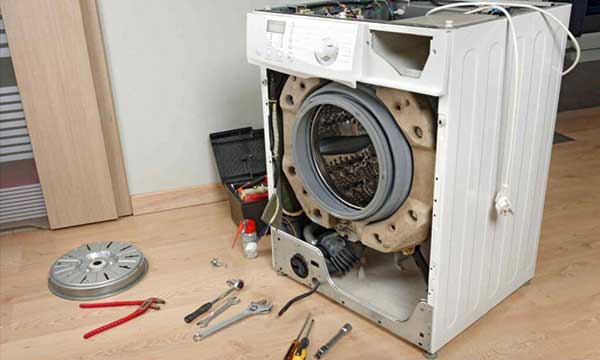
Common problems include a washing machine that does not start, fails to spin, does not drain water, leaks, makes unusual noises, or stops during a washing cycle. In some cases, the problem may be caused by a small component, while other faults may require professional diagnosis and replacement of damaged parts.

Fortunately, there are several washing machine repair services in Nairobi that can help diagnose and fix these problems. Professional technicians can work on different washing machine brands and models and provide on-site repair services in many parts of Nairobi.

Below are five companies and service providers that customers can consider when looking for washing machine repair in Nairobi.

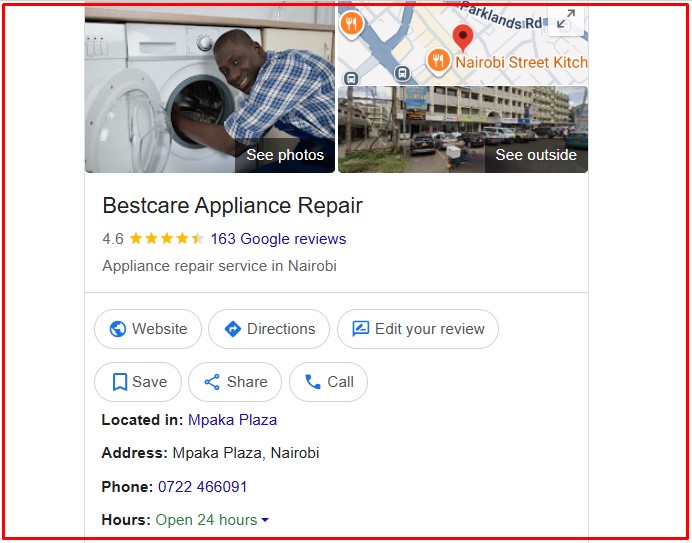
1. Bestcare Appliance Repair

Bestcare Appliance Repair provides home appliance repair services in Nairobi, including washing machine repairs. The company handles both newer and older appliance models.

bestcare appliance repair washing machine repair in nairobi

A technician can inspect the washing machine, identify the cause of the problem, and recommend the appropriate repair.

Services may include mechanical repairs, electrical troubleshooting, replacement of damaged components, installation, relocation, and general maintenance.

Services include:

  • Washing machine troubleshooting
  • Washing machine installation
  • Washing machine relocation
  • Replacement of faulty parts
  • Electrical fault diagnosis
  • General appliance servicing
  • Preventive maintenance

Service area

Services are available in Nairobi and areas such as Parklands, Ngara, Eastleigh, Embakasi, and surrounding neighborhoods.

For homeowners with several appliances, using an appliance repair company can also be useful when a washing machine needs attention together with other household appliances.


2. Imperial Appliances Kenya

Imperial Appliances Kenya provides washing machine repair services for homes and businesses in Nairobi. The company focuses on diagnosing appliance problems and repairing faulty washing machines.

Its technicians can work on different types and brands of washing machines. Depending on the problem, repairs may involve replacing worn-out parts, repairing electrical components, fixing drainage problems, or servicing the machine.

Imperial Appliances Kenya - Washing Machine Repair Company in Nairobi
Imperial Appliances Kenya – Washing Machine Repair Company in Nairobi

Services include:

  • Washing machine diagnosis and troubleshooting
  • Washing machine repair
  • Motor and belt replacement
  • Drain pump repair and replacement
  • General maintenance
  • Faulty component replacement
  • Emergency repair services

Service area

The company serves Nairobi and surrounding areas, including Westlands, Kilimani, Lavington, Karen, and other neighborhoods.

For customers looking for washing machine technicians in Nairobi, a mobile repair service can be convenient because the technician can inspect the appliance at home.

Find The Best Providers of Fridge Repair in Nairobi Here!

3. RepairKE Service Center

RepairKE Service Center provides appliance repair services for domestic and commercial customers in Nairobi.

The company offers washing machine diagnosis and repair for both mechanical and electrical problems. Professional diagnosis is important because the same symptom can sometimes be caused by different faults.

For example, a washing machine that does not spin could have a problem with the motor, belt, door lock, control board, or another component.

Services include:

  • Washing machine diagnosis
  • Mechanical repairs
  • Electrical repairs
  • Parts replacement
  • Washing machine servicing
  • Urgent repair services
  • Domestic and commercial appliance repair

Service area

The company serves Nairobi and nearby areas, including Thika, Ruaka, Kiambu, and other surrounding locations.

4. Machine Repair Nairobi

MachineRepairNairobi.co.ke provides washing machine repair services in Nairobi for customers experiencing problems with their home appliances.

The service focuses on troubleshooting and repairing common washing machine faults. Technicians can inspect the appliance and determine whether the problem can be repaired or whether a faulty component needs to be replaced.

Services include:

  • Washing machine repairs
  • Fault diagnosis
  • Parts replacement
  • Washing machine servicing
  • Drainage repairs
  • Spin-cycle repairs
  • Preventive maintenance

Service area

MachineRepairNairobi.co.ke serves customers in Nairobi and surrounding areas.

Customers can use the service when they need a technician to inspect a washing machine that is leaking, making unusual noises, failing to drain, or refusing to start.

5. Nairobi Online

Nairobi Online helps customers find and connect with appliance repair technicians in Nairobi.

The platform can be useful for people who want to arrange washing machine repair without spending a lot of time searching for a technician.

Customers can request repair services and find technicians who serve different parts of Nairobi.

Services include:

  • Washing machine repair bookings
  • Appliance repair connections
  • Access to repair technicians
  • Home repair services
  • Appliance troubleshooting
  • Maintenance services

Service area

Services are available in Nairobi and surrounding suburbs.

When choosing a technician through a repair platform, customers should confirm the technician’s experience with their particular washing machine brand and ask about the expected repair cost before work begins.

1 washing machine repair nairobi
A home inspector checking a residential home kitchen.

10 Common Washing Machine Problems That Get Fixed in Nairobi

Washing machines can develop different mechanical, electrical, and water-related problems. Below are some of the most common issues handled by washing machine repair technicians.

1. Washing Machine Not Starting

One of the most common complaints is a washing machine that does not turn on.

The problem may be caused by a faulty power connection, damaged power cable, door lock, control board, fuse, or other electrical component.

A technician can test the appliance and identify the exact cause instead of replacing parts unnecessarily.

2. Washing Machine Not Spinning

A machine may fill with water and wash normally but fail to spin.

Possible causes include a damaged belt, motor problem, blocked system, faulty door lock, unbalanced load, or control-board fault.

A technician can inspect the machine and determine which component is causing the problem.

3. Washing Machine Not Draining

If water remains inside the drum after a washing cycle, the drain system may be blocked or damaged.

Common causes include a blocked drain filter, clogged hose, faulty drain pump, or an object stuck inside the drainage system.

Professional cleaning or pump replacement may solve the problem.

4. Washing Machine Leaking Water

Water leaking from a washing machine should not be ignored. Continued leakage can damage floors, walls, cabinets, and electrical components.

Leaks can come from damaged hoses, door seals, loose connections, detergent drawers, pumps, or other internal components.

A technician can locate the source of the leak and repair or replace the affected part.

5. Washing Machine Making Loud Noises

Unusual banging, grinding, rattling, or humming sounds can indicate a mechanical problem.

Possible causes include worn bearings, loose components, foreign objects, an unbalanced drum, or motor problems.

Early inspection can prevent a small problem from becoming a more expensive repair.

6. Washing Machine Not Filling With Water

A washing machine may fail to fill if there is a water supply problem, blocked inlet filter, faulty inlet valve, damaged hose, or electrical fault.

The technician can check the water supply and test the inlet components.

7. Washing Machine Stops During a Cycle

Sometimes a washing machine starts normally but stops before completing the program.

This can be caused by overheating, drainage problems, water supply issues, door-lock faults, motor problems, or a control-board issue.

Proper diagnosis is important because several different faults can produce the same symptom.

8. Washing Machine Not Heating Water

For washing machines with a heating function, cold water throughout the cycle may indicate a faulty heating element, temperature sensor, wiring, or control component.

A technician can test these components and replace the faulty part where necessary.

9. Washing Machine Shaking or Moving

A washing machine that moves excessively during the spin cycle may be poorly positioned or have an unbalanced load.

However, excessive shaking can also be caused by worn suspension components, damaged shock absorbers, or other mechanical problems.

The machine should be inspected if the shaking continues even after the load is balanced.

10. Washing Machine Showing Error Codes

Modern washing machines often display error codes when they detect a problem.

The code may indicate an issue with the door, water supply, drainage, motor, heating system, or another component.

The correct repair depends on the specific brand and error code. A technician can diagnose the problem and reset or repair the appliance where necessary.

How to Choose a Washing Machine Repair Company in Nairobi

Choosing the right repair technician can save you money and prevent repeated breakdowns.

Before hiring a technician, consider the following:

Check experience

Choose a technician who has experience repairing your washing machine brand and model.

Ask about the problem

A good technician should explain what is wrong with the machine and what needs to be repaired.

Request a quotation

Ask for an estimated repair cost before approving major work. The quotation should indicate whether labor and replacement parts are included.

Check replacement parts

Ask whether replacement parts are genuine, compatible, new, or refurbished.

Consider warranty

If a major part is replaced, ask whether the repair or replacement part comes with a warranty.

Avoid unnecessary repairs

A professional technician should diagnose the problem before recommending expensive replacements.

Washing Machine Maintenance Tips

Regular maintenance can reduce the chances of unexpected breakdowns.

Here are some simple maintenance tips:

  • Do not overload the washing machine.
  • Clean the drain filter regularly.
  • Check water hoses for damage.
  • Keep the detergent drawer clean.
  • Use the correct amount of detergent.
  • Remove coins and other objects from clothes before washing.
  • Keep the washing machine level.
  • Leave the door slightly open after use to allow the drum to dry.
  • Inspect unusual sounds early.
  • Arrange professional servicing when necessary.

Proper maintenance can improve washing machine performance and may extend the life of the appliance.

Frequently Asked Questions About Washing Machine Repair in Nairobi

1. How much does washing machine repair cost in Nairobi?

The cost depends on the type of fault, washing machine brand, replacement parts required, and technician’s labor charges. Simple repairs may cost less than repairs involving motors, control boards, pumps, or other expensive components.

2. How long does washing machine repair take?

Simple repairs can sometimes be completed during the first visit. More complicated problems may take longer if replacement parts need to be sourced.

3. Can a technician repair my washing machine at home?

Yes. Many washing machine technicians in Nairobi provide mobile or on-site repair services. This is convenient because customers do not have to transport a heavy appliance to a workshop.

4. Which washing machine brands can be repaired?

Professional technicians can often repair many common brands, including Samsung, LG, Bosch, Siemens, Whirlpool, Hisense, Midea, Haier, Electrolux, Beko, Ariston, and other brands. Always confirm that the technician has experience with your specific model.

5. Why is my washing machine not spinning?

A washing machine may fail to spin because of an unbalanced load, damaged belt, motor fault, door-lock problem, drainage issue, or control-board fault. Professional diagnosis can identify the actual cause.

6. Why does my washing machine have water left inside?

Water remaining inside the drum is often caused by a blocked drain filter or hose, a faulty drain pump, or another drainage problem. Cleaning or replacing the affected component may solve the issue.

7. Is it worth repairing an old washing machine?

It depends on the age and condition of the appliance and the cost of the repair. If the repair is relatively inexpensive and the machine is otherwise in good condition, repairing it may be more economical than buying a new one.

8. How often should a washing machine be serviced?

There is no single service schedule for every machine. Regular cleaning and basic maintenance should be done by the owner, while professional servicing can be arranged when the machine develops problems or according to the manufacturer’s recommendations.

9. Should I continue using a leaking washing machine?

It is better to stop using a washing machine that is leaking until the cause is identified. Water can damage floors and electrical components and may create a safety risk.

10. How can I find the best washing machine repair service in Nairobi?

Compare technicians based on experience, reputation, availability, pricing, warranty, and experience with your washing machine brand. Ask for a diagnosis and quotation before approving major repairs.

A faulty washing machine can quickly disrupt your daily routine, but many common problems can be repaired by an experienced technician. From machines that fail to start or spin to drainage problems, leaks, unusual noises, heating faults, and error codes, professional washing machine repair services in Nairobi can help restore your appliance.

Imperial Appliances Kenya, Bestcare Appliance Repair, RepairKE Service Center, MachineRepairNairobi.co.ke, and Nairobi Online are options for customers looking for appliance repair assistance in Nairobi and surrounding areas.

When choosing a repair service, consider the technician’s experience, the quality of replacement parts, repair costs, warranty, and availability of on-site service. Regular maintenance can also help prevent breakdowns and keep your washing machine working efficiently for longer.

For reliable washing machine repair in Nairobi, it is always best to have the appliance properly diagnosed before replacing expensive parts or deciding to purchase a new machine.